Beneficial Birds for the Garden
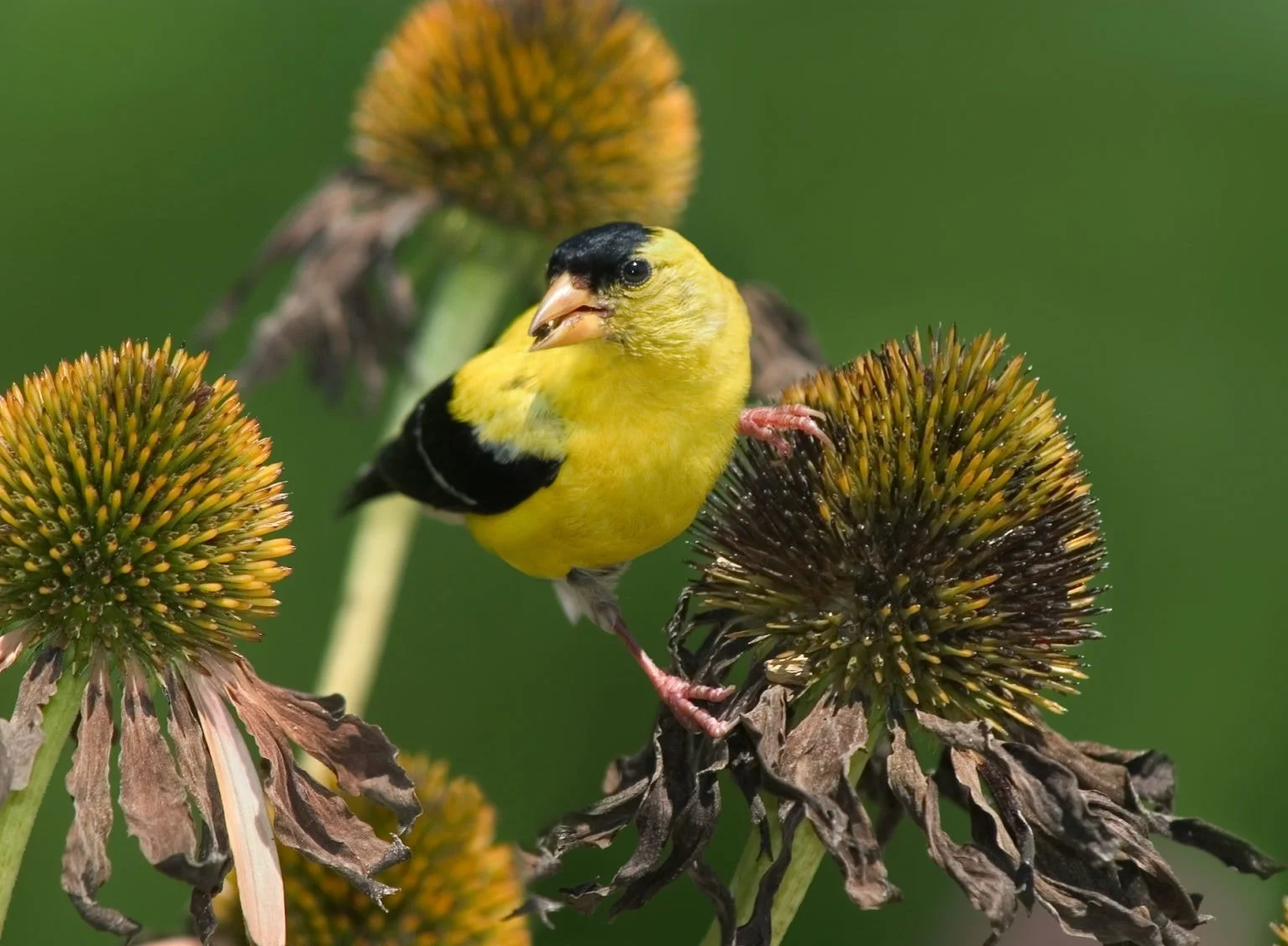
Photo: Yellow Finch on Coneflower - Farmer’s Almanac
Early morning walks are part of my daily routine, and I am accompanied by a chorus of singing birds that are particularly active at 5:00 a.m. Sometimes the cacophony of crows disrupts the experience, but more often it is quite harmonious. What, if any, benefits do these singing creatures bring to the garden?
Hummingbirds are top-notch pollinators, but their tiny chirps are not often heard unless someone is sitting right next to a feeder. Nevertheless, they must be included on any list of birds beneficial to the garden.
The Eastern Bluebird is one of the more striking songbirds in the United States. It has a specific habitat requirement of open grassy spaces with trees for perching. However, this bird is more than just pretty feathers. It consumes many of the insect pests that plague gardens, including crickets, grasshoppers, moth larvae, and beetles.
Other insect-eaters include cardinals, grosbeaks, orioles, nuthatches, and chickadees. Cardinals, grosbeaks, and orioles favor caterpillars, beetles, grasshoppers, and leafhoppers. Chickadees are excellent predators of aphids, whiteflies, ants, and earwigs.
Woodpeckers and nuthatches target insects that infest trees and shrubs. Woodpeckers will drill into wood to reach boring insects that damage trees. While that will not eradicate a borer infestation, it can help identify the existence of a problem. One study showed that woodpeckers and nuthatches help control codling moths in walnut orchards. Adding birds to an orchard pest-control system already using beneficial insects reduced codling moth larvae by 46%, compared to an 11% reduction when beneficial insects were used alone.
Songbirds such as sparrows, finches, and towhees have a voracious appetite for seeds, including weed seeds. By eating seeds, they help keep weed populations under control and reduce the spread of unwanted plants.
Raptors, including hawks and owls, are efficient hunters of the rodents that plague gardens. Wine growers in Napa Valley, California, set up barn owl boxes to encourage families to move in. Each bird can consume up to 3,500 rodents, including gophers and voles, per year that would otherwise damage their valuable crops.
To encourage birds to take up residence in the landscape, plant a variety of species, including flowers, shrubs, vines, and grasses. Make sure something is blooming throughout the growing season, and provide flowers, berries, and seeds as food sources. Eliminate or minimize the use of insecticides and herbicides. Provide food during the winter, including a variety of choices such as seeds, nuts, and suet.
Supply water; shallow is better than deep. A birdbath 1–3 inches deep and about 2 feet wide is ideal. Place one water source at ground level for birds that prefer to feed on the ground. Clean it every three days to remove droppings, algae, and fungi and to help prevent disease.
Provide places for shelter, nesting, and protection. Bushes and shrubs will work for some species, while others will need birdhouses or nesting boxes. Be sure to keep any houses and boxes clean.
Not only do birds provide pest control, pollination, and weed-seed control, they also provide stress relief and enjoyment. They are colorful additions to our environment that bring joy and connect us to the natural world around us. Spending time watching and listening to birds can reduce the mental fatigue many of us experience in a stressful world. Research aside, personal experience attests to the benefits of slowing down and enjoying the world around us, especially during an early morning walk accompanied by birdsong.
Carol Shirk
Certified Master Gardener