Quaint Hollyhock Make a Resurgence
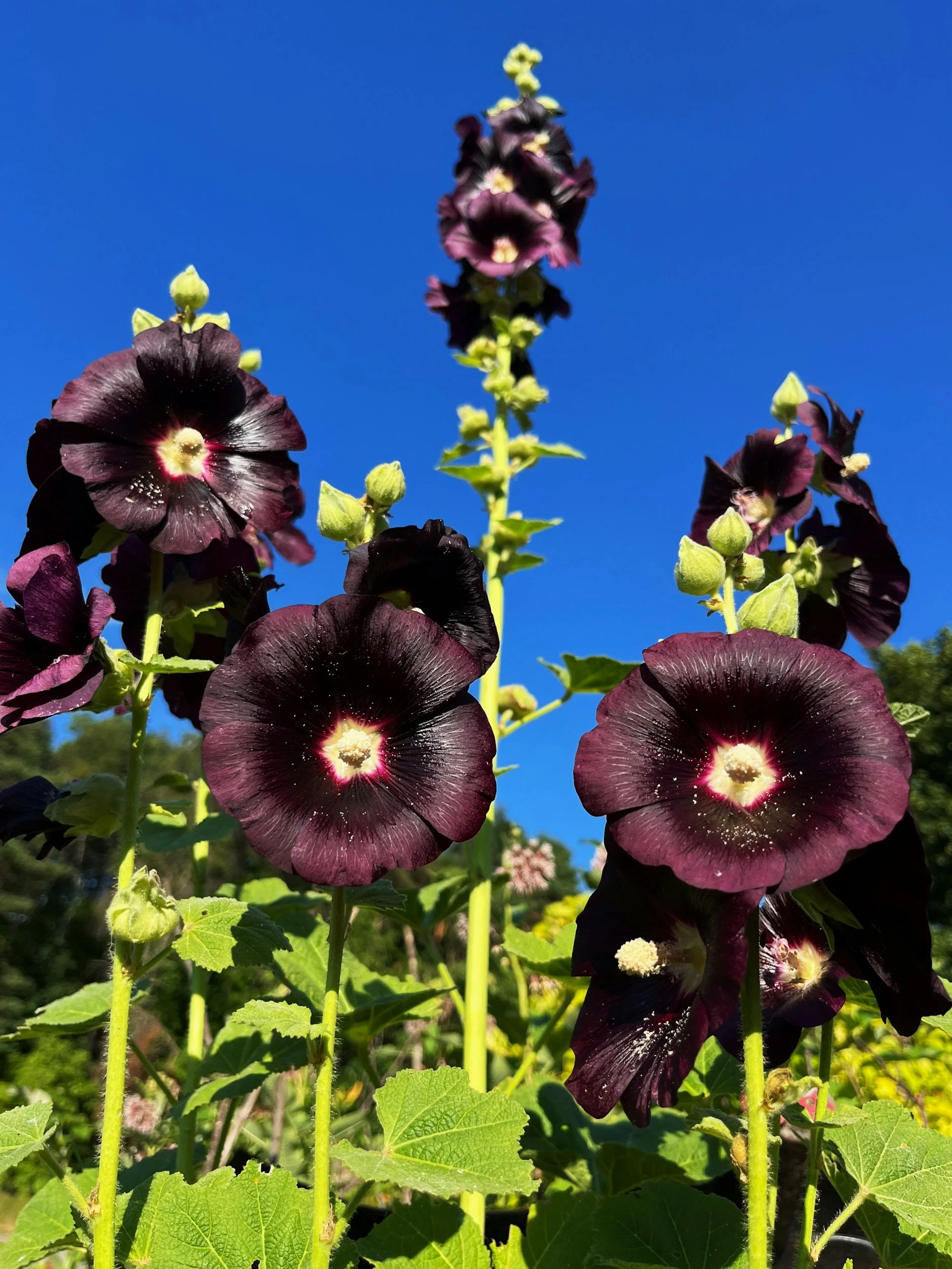
Hollyhocks (Alcea) are old-fashioned flowers often found around the foundations of abandoned farmhouses and older homes. In times past, children used the blooms as adornments for their dolls or fashioned dolls from the parts of the flowers themselves. Hollyhocks are a staple of cottage gardens and have experienced a resurgence in recent years.
Native to Asia, these stately plants are members of the mallow family, along with mallow, hibiscus, and okra. They typically reach 3–6 feet in height, though some cultivars can exceed 9 feet. Because of their towering stature, hollyhocks are best planted at the back of garden beds or along walls and fences.
Traditionally, the blooms were red, which remains the most common color. However, they are also available in shades of pink, yellow, purple, white, and a deep purple often referred to as “black.” The flowers open from the bottom of the stalk and continue upward as the season progresses. Both single and double, cup-shaped varieties are available. Bloom time extends from late spring into early summer—about four weeks—and can be prolonged by deadheading.
Hollyhocks are biennial plants: in the first year, they produce a rosette of leaves; in the second, they flower. They will self-sow if allowed to go to seed. To stay healthy, they require adequate spacing (12–18 inches apart) and full sun for optimal flowering. They adapt to most soil types, except heavy clay, but all soils must be well-draining. Given their stunning height, they benefit from protection from strong winds and may require staking, although newer cultivars tend to have sturdier stems.
Avoid fertilizing hollyhocks with high-nitrogen fertilizers, as this encourages leafy growth at the expense of blooms. Instead, apply a balanced fertilizer early in the season or one higher in potassium during bloom time. Incorporating compost into the soil is also beneficial.
At the end of the season, cut plants back to within 5–6 inches of the ground, except for those intended to self-seed. Remove and dispose of all debris to reduce the risk of fungal diseases.
Hollyhock rust, a common fungal disease, can affect these plants but is largely preventable with proper care. Avoid overcrowding to ensure good air circulation. Apply mulch in spring to prevent spores from splashing up from the soil. Water early in the day and avoid wetting the leaves so they can dry before nightfall.
If rust has been a problem, treat plants preventively or at the first sign of infection with an appropriate fungicide. Infected plants develop orange or yellow spots that eventually turn brown. While minor infections may not be immediately harmful, severe cases can be fatal. Clean up garden debris in the fall and destroy infected plants.
Despite the risk of rust, these magnificent flowers are well worth growing. In earlier centuries, they were known as “outhouse flowers,” as they were often planted to provide both beauty and privacy—sparing delicate visitors the embarrassment of asking for directions.
Carol Shirk
Certified Master Gardener