May Delights
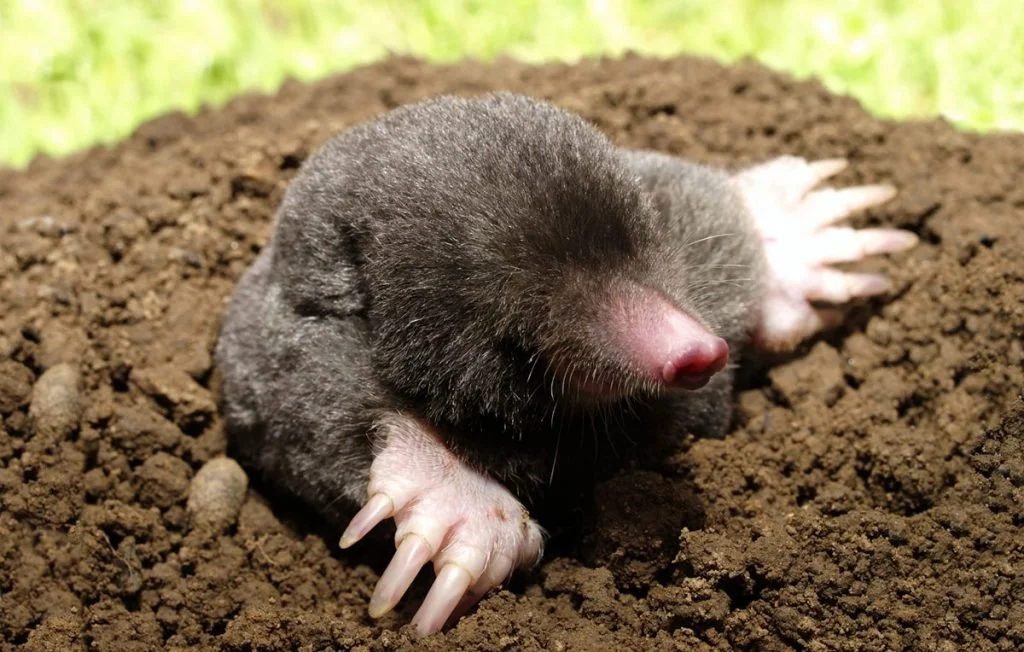
Photo: Illinois Department of Natural Resources
Closeup of common mole
https://wildlifeillinois.org/identify-wildlife/moles/
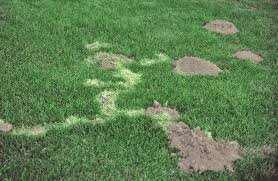
Mole mounds and tunnels
https://wildlifedamage.cals.wisc.edu
The merry month of May is upon us. With it come bleeding hearts, irises, lilacs—and… moles.
While moles do not hibernate during winter, they retreat deeper below the frost line and are less noticeable. They become more active after their pups are born in April, and evidence of their presence in lawns begins to appear consistently in May.
Two species of moles are found in Wisconsin: the common mole (Scalpous aquaticus) and the star-nose mole (Condylura cristata). The common mole is most prevalent in Dodge County, while the star-nose mole is more often found in northern counties. Moles measure 7–8 inches long and have small, poorly developed eyes and ears—features unnecessary for life underground. Their large, broad front claws and flat feet are perfectly adapted for the constant digging essential to their existence. Their short, velvety fur can be brushed in either direction without resistance, allowing them to move both forward and backward in the tunnels with ease.
Moles are widely misunderstood, though clearing up a few facts may not make them any more welcome. They are insectivores, feeding primarily on grubs, beetles, larvae, and earthworms. In fact, moles consume 70 to 100 percent of their body weight each day. They are not responsible for eating bulbs, seeds, or other garden plants; the more likely culprits are mice, voles, ground squirrels, and insects. Therefore, positively identifying the culprit for the damage is imperative in correcting it.
That said, mole tunnels can wreak havoc in lawns and gardens. They interfere with mowing and often appear along rows of newly planted seedlings. The mole is not being malicious—these areas simply offer softer soil and more abundant food—but that is little comfort to homeowners.
A network of mole runs can give the impression of a large infestation. In reality, moles are solitary and far less numerous than rodents. A population of three to five per acre would be considered high, so removing even a few can significantly reduce damage.
Numerous “home-grown” remedies—ranging from putting broken glass to chewing gum in the runs—are largely ineffective and can be dangerous. Electromagnetic, vibration, and ultrasonic devices are also marketed at considerable cost, but laboratory tests have not demonstrated consistent effectiveness.
One control method is to reduce the mole’s food source. In severe cases, chemical treatments can be used to control grubs, though these may also harm beneficial insects and ground-feeding birds.
Poisons and fumigation have limited success. Because moles feed on insects, poisons are generally unattractive to them, and fumigants rarely reach the full extent of their tunnel systems.
The most effective solution is trapping. Packing down an active run and setting a harpoon trap is both effective and humane. Success depends on identifying active tunnels, which may take some trial and error. Another option is the choker trap, though it is more difficult to set. If the trap fails to catch a mole in two days, it means the run has been abandoned, the mole detected a disturbance, or the trap was improperly set. In any case, move to another spot.
Moles do provide some benefit by aerating the soil and consuming destructive insects. If their activity is not disruptive, they may be worth tolerating. If it is, patience and persistence are key to controlling the problem.
Carol Shirk
Certified Master Gardener