Virginia Bluebells
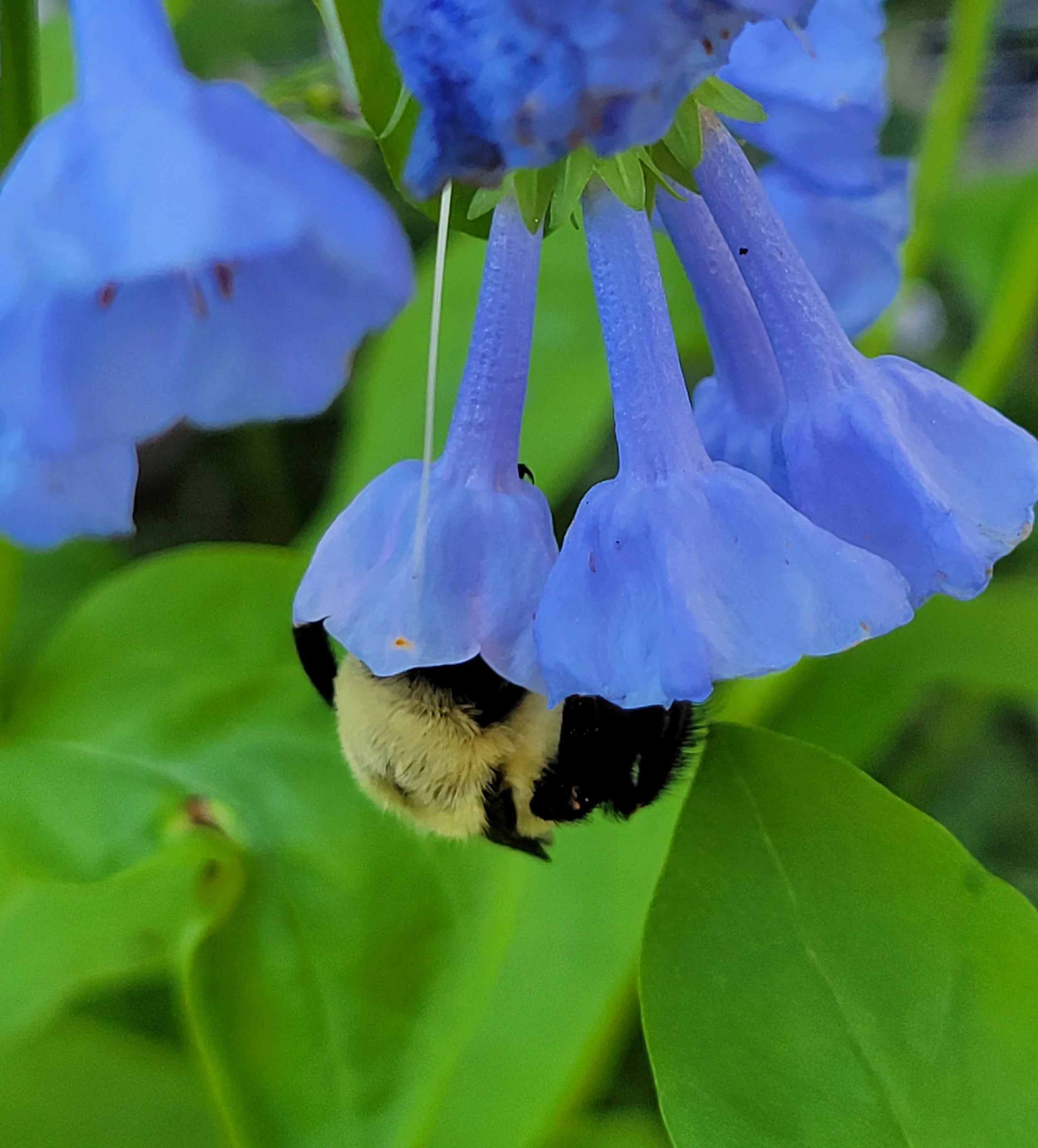
Are your go-to spring flowers crocus, tulips or daffodils? Since April is National Native Plant Month, let’s take a look at Virginia bluebells (Mertensia virginica), a native spring ephemeral that creates a beautiful mid-spring flower display while providing valuable resources for pollinators.
Virginia bluebells emerge as dark purple spikes. As the leaves expand, they transform to a blue to gray-green oval-shaped foliage. Mature plants will reach a height of up to two feet and about one foot wide. The sky-blue trumpet-shaped flowers open from soft pink buds and release a delicate sweet fragrance that lasts for several weeks. While in bloom, these flowers attract a wide-range of pollinators, including long tongued bees, butterflies, hummingbird moths and hummingbirds. After flowering, the plants die back to the ground and go dormant for the summer, reappearing the following spring.
Virginia bluebells are commonly found in moist woodlands and river flood plains, but will adapt well to shady areas in the landscape. They are hardy in USDA zones 3 – 9 and prefer moist well-drained soil in partial to full shade. These plants do not tolerate sunny, dry locations. Once established, they naturalize readily by self seeding and by spreading via underground rhizomes. The plants have a long taproot, so once established they don't care to be disturbed. Although native to woodland environments, deer and rabbits tend to leave Virginia bluebells alone.
The plant is native to much of eastern North America and parts of Canada. Due to habitat destruction, Virginia bluebells are considered threatened in portions of their native range, making garden cultivation an important way to help preserve this species.
In the perennial border, Virginia Bluebells pair beautifully with yellow or orange spring bulbs such as daffodils or pink tulips. Maidenhair fern and Virginia bluebells are a nice combination for a more formal shade garden. For the spring woodland or wildflower garden, Virginia bluebells pairs well with bleeding heart, celandine poppy, and Trillium grandiflorum. To fill the space left behind when the plants go dormant for the summer, plant them with shade-loving perennials that will expand and cover the space as the growing season progresses. Hostas, astilbe, Solomon seal, ferns, sedges and wild ginger are excellent companion choices.
Virginia Bluebells make a welcome addition to shady woodland, wildflower, or native plant gardens. Their soft pastel flowers and foliage bring a calming presence to shaded areas, and when planted in mass, they create an especially impressive spring display.
Chris Jacobs
Certified Master Gardener