Overwintering Geraniums
September is the month when it still feels like summer on many days, but fall planning begins in earnest. It is the best month to begin thinking about which annuals to keep and which to allow to succumb to the pending frost. Geraniums are one popular annual that can be kept from year to year.
Geraniums have long been popular annual bedding plants due to their versatility. They come in a wide range of flower colors, leaf shapes, color patterns, and compatibility with other plants. They are resistant to most pests, tolerate mild neglect, and bloom consistently all season long. After putting in the effort to keep these lovely specimens alive for months, it seems a shame to relegate them to the compost. There are three tried-and-true methods for overwintering them.
While geraniums are robust, the first step should be to disinfect all tools and pots to prevent any disease or insect infestation. Use a one-part bleach to nine-parts water solution to clean everything before beginning. Choose only healthy, insect-free plants for the best results.
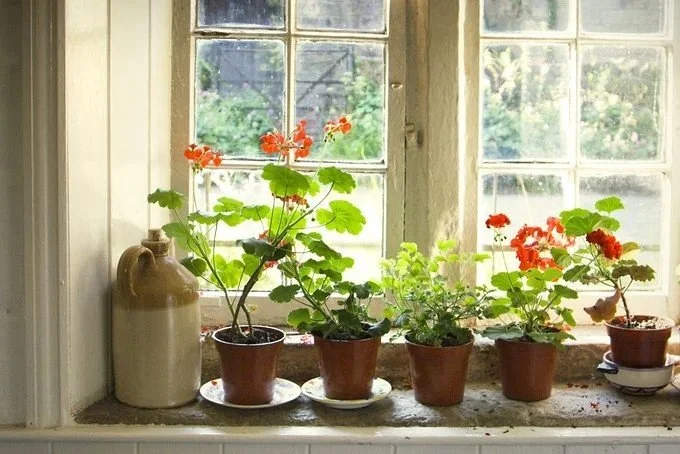
The first method is to simply bring the entire pot into a frost-free environment. Trim the plant back by one-third to one-half to compensate for the lower light conditions. If the plant begins to lose leaves while indoors, it is not receiving sufficient light. Choose a location away from drafty windows and heat vents. They will do best in a cooler location, around 60–65 degrees. Water them when they feel dry, but do not overwater. If they begin to look “leggy,” pinch them back at a leaf node to promote new growth and create a stockier plant.
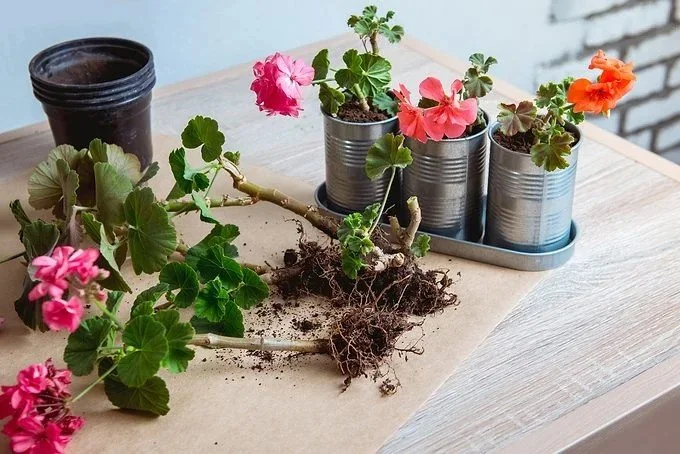
The second method is referred to as the “bare-root” method. Dig up the plant, remove all the soil from the roots, cut it back by one-third, and hang it upside down in a cool (35–45 degree), humid basement where there is approximately 85 percent humidity. These conditions often occur in an older, unfinished basement. To simulate this environment, put the plant in a covered cardboard box with an open can of water. In this case, it can be located in a heated basement. In the spring, before planting, soak the roots for 24 hours and cut off all the dried branches. There will likely be a green stem and some sprouts on the plant.
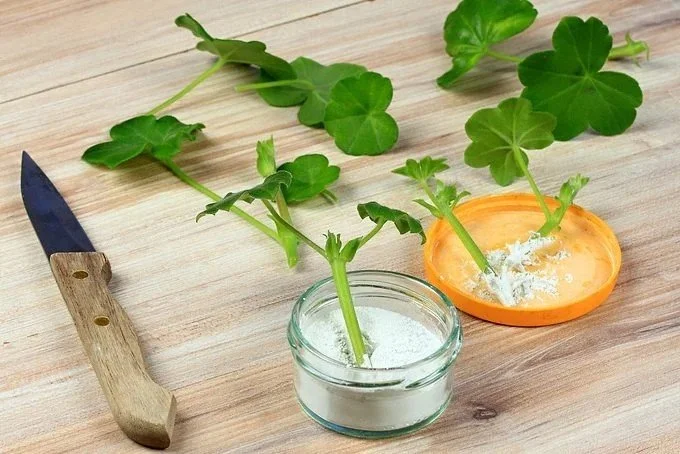
The third method is to take cuttings from the mature plant. This works well if you do not have sufficient space to overwinter a large plant or if you do not have a suitable location to store a bare-root plant. In this case, cut 4–5 inches from healthy terminal tips and strip off the lower leaves. Dip the stem in rooting hormone, available from most garden centers. Place the cutting in a soilless potting mix, water it, and cover the entire pot with a plastic bag to create a mini-greenhouse. Place it in a sunny spot, but not in direct sunlight. Once roots have formed, usually in 3–4 weeks, transfer the cutting to a larger pot with potting soil. If it becomes leggy, pinch it back to a leaf node to promote new growth.
Regardless of the method used to overwinter geraniums, be sure to harden them off before moving them outdoors. Give them a little more sun each day over a two-week period until they are ready for full-time outdoor life.
Carol Shirk
Certified Master Gardener