Crabapple Trees: Bust or Boon?
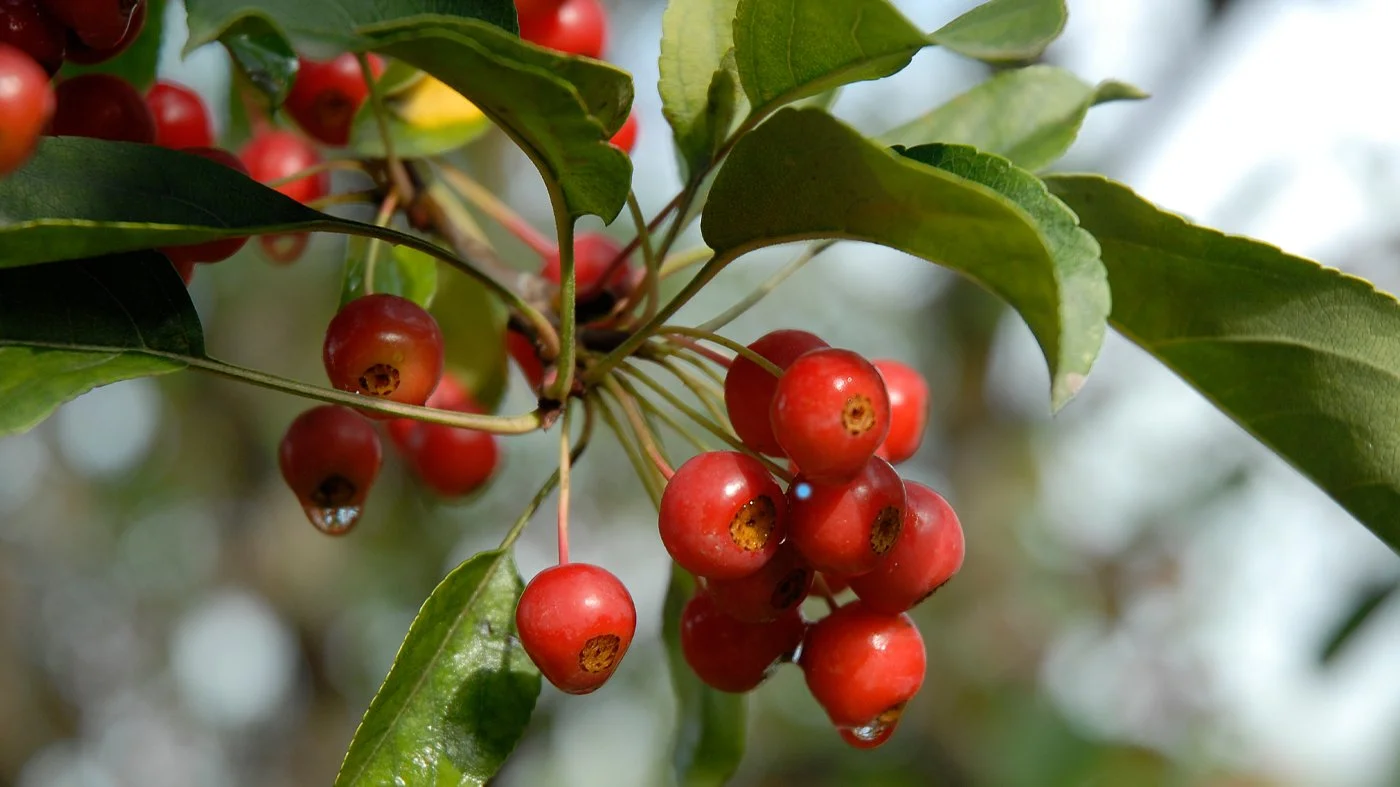
Crabapple trees (malus species) are closely related to apple trees but have smaller, edible fruits. Many homeowners remember crabapple trees as messy and would never consider planting one in the landscape. However, newer varieties deserve a second look.
Ornamental, or flowering, crabapples are small to medium-sized trees ideal for urban lots. Because of their smaller stature, they can grow under power lines or fit into a patio setting. They can be used as specimen trees, background trees, grouped as a screen, or as wildlife habitat.
There are more than 650 different cultivars of crabapple trees in a variety of sizes and forms, with different leaf, fruit, and blossom colors. When choosing one for the landscape, take care to evaluate disease resistance and fruit characteristics. There are many varieties with smaller-sized fruits that persist (stay on the tree) during the winter, taking that “messiness” factor out of the equation.
In the spring, flowering crabapple trees live up to their name. They burst forth with single (five-petaled), semi-double (six to ten petals), or double (ten or more petals) red, white, or pink blooms. The buds are attractive before they bloom and may be a different color before they open. For instance, the bud may be red-purple while the bloom itself is white.
Fruit can range from one-quarter to two inches in diameter and can be yellow, orange, purple, pink, green, or brilliant red. The fruit of many newer varieties will remain on the trees far into the winter. It is edible and makes delicious jellies, cider, spiced apples, and sauce. In addition, wildlife will be grateful for the fruit. Birds, small mammals, deer, and even insects will dine on the smorgasbord of blossoms and fruit.
But the beauty does not end with the blossoms and fruit. Some of the trees have a showy fall display ranging from yellow to red, orange, and purple. The branching of crabapple trees makes interesting silhouettes for winter interest when leaves are absent. The bark will develop an attractive mottling as the tree matures.
Beauty aside, crabapple trees do have some disease issues, including fire blight, apple scab, rust, and powdery mildew. Therefore, cultivar selection is important, and this list has the top ornamental crabapples for Wisconsin: https://hort.extension.wisc.edu/articles/top-ornamental-crabapples-wisconsin/. In addition, avoiding excessive shading and excessive nitrogen, and allowing for adequate air circulation around trees, will minimize these diseases.
Once established, crabapple trees are drought-tolerant. They prefer full sun but can withstand light shade. Well-drained soil is important. Planting them in turf areas introduces them to more water and fertilizer than needed and results in increased disease potential. A better choice is planting them in a mulched bed where their needs can be individually met.
As with other apple trees, some pruning is recommended. Keep an open center in the tree for good air circulation and light penetration. Remove dead or broken branches, any that are crossing, as well as any growing straight up (water sprouts). Some varieties will grow suckers at the base, and these should be removed regularly. Planting the tree too deeply will contribute to suckering, so take care to plant it properly initially.
While crabapple trees might not have come to mind at first, as the old saying goes, “Take a chance, Columbus did.” The beauty, wildlife benefits, and edible fruit are worth any inconvenience.
Carol Shirk
Certified Master Gardener