Speedwell: A Delightful and Dependable Perennial
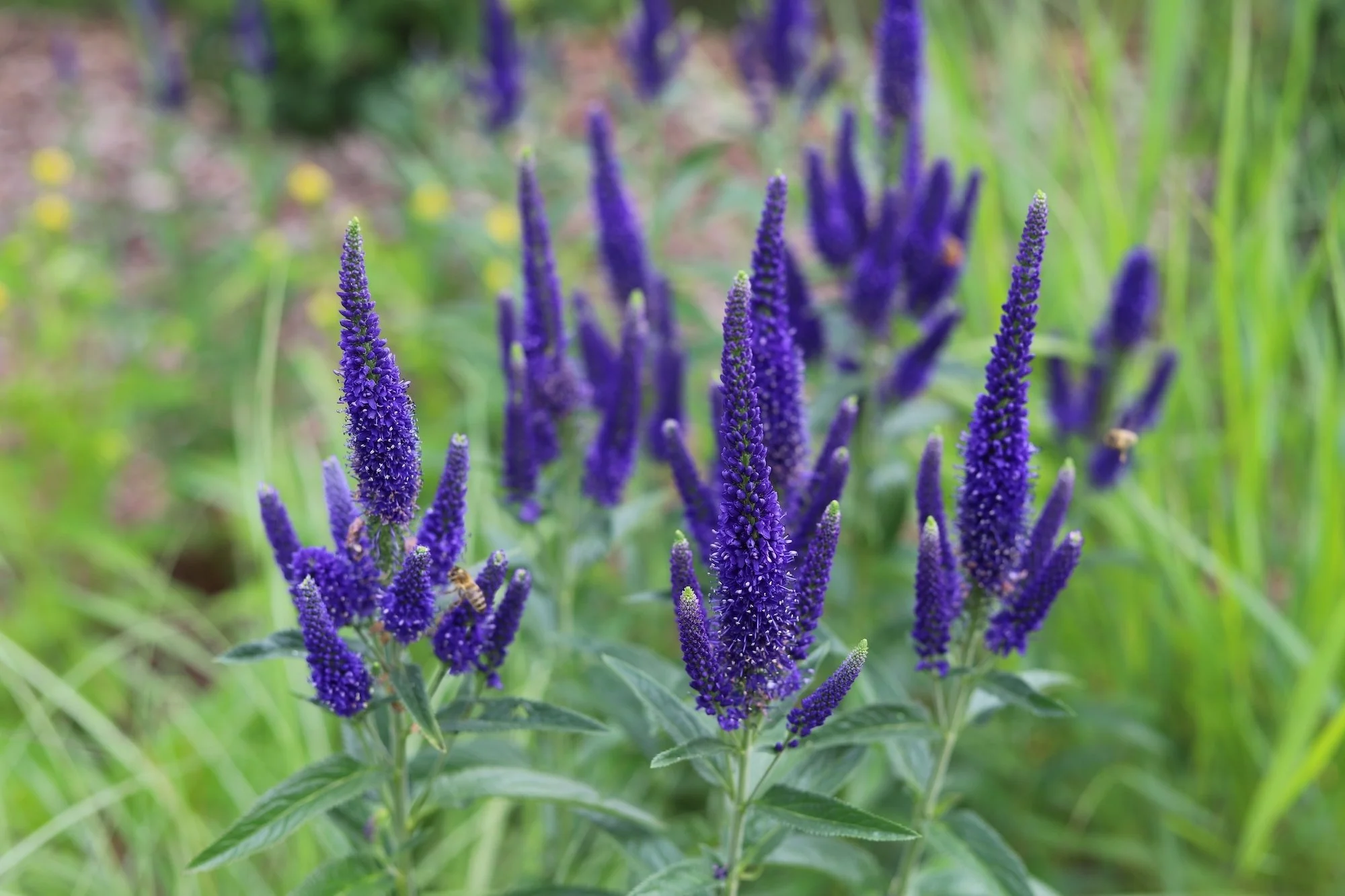
Photo: Veronica spicata, a spiky speedwell plant with blue flowers. https://www.almanac.com/plant/veronica-speedwell
Gardeners are often looking for a dependable, low-maintenance perennial that will not grow so aggressively that it takes over the entire garden space. Look no further than the Veronicas, also known by their common name, the Speedwells. They can withstand Wisconsin winters and still stand up to the heat and drought that are common during the summer.
There are more than 450 species in this worthy group of plants, some native and some hybrids. There are creeping varieties suitable for ground covers and upright varieties that grow up to three feet tall and make excellent cut flowers. Some bloom early in the spring, while others display their beauty later in the season, lasting until frost. Deadheading will extend bloom time. The long, slender flower spikes, called racemes, come in shades ranging from white and pink to purple and particularly desirable blues, making Veronicas an excellent addition to any perennial garden.
The creeping varieties do not perform well in wet conditions, but they thrive in rock gardens, as ground covers in dry locations, as fillers between bricks or flagstones, or beneath small trees and shrubs. They grow best in full sun with limited water.
Two creeping veronicas, Thyme-leaf Speedwell (V. oltensis) and Turkish Speedwell (V. liwanesis), as well as the hybrid of the two, Blue Woolly Speedwell, perform very well in northern climates. They grow quickly, form a dense carpet, and produce attractive blue flowers. They are drought tolerant and can be planted over spring bulbs because they do not impede bulb growth but provide ground cover after the bulb foliage dies back.
Upright Veronicas provide a stunning vertical accent in the garden. They bloom from the bottom upward, and when cut back, many varieties will rebloom. They grow best in full sun and well-drained soil, ranging in height from 10 to 36 inches.
Long-leaf Veronica (V. longifolia) is one of the tallest and most popular species. The blue, pink, or white flower spikes can reach 12 inches in length, making them an excellent choice for the back of the garden. If wind is an issue, staking may be necessary.
Spiked Speedwell (V. spicata) is another popular choice and is likely the most widely grown species. Numerous cultivars and hybrids are available, with blooms in pink, white, and shades of blue and in a wide range of heights. They make excellent cut flowers and fit the bill as a low-maintenance perennial.
Plant Veronicas in the spring when the soil is warm enough to be worked. Although they are rarely grown from seed, it is possible. Germination can take three to four weeks. More commonly, plants are propagated through division or cuttings. Once established, divide plants every three to four years to keep them healthy. Cut the plants back to the ground in the fall, and they will return to their former splendor the following season.
The Chicago Botanic Garden spent 10 years conducting trials of dozens of Veronica cultivars, evaluating them for flower production, disease resistance, and cold hardiness. A complete report of their findings is available at:
https://www.chicagobotanic.org/downloads/planteval_notes/no33_veronica.pdf
Top performers in both the upright and creeping categories included Veronica 'Blue Reflection,' 'Mrs. Holt' (V. prostrata) among the creeping types, and 'Ionian Skies' (V. austriaca), 'Blue John' (V. longifolia), and 'Baby Doll' (V. spicata) among the upright selections.
Carol Shirk
Certified Master Gardener