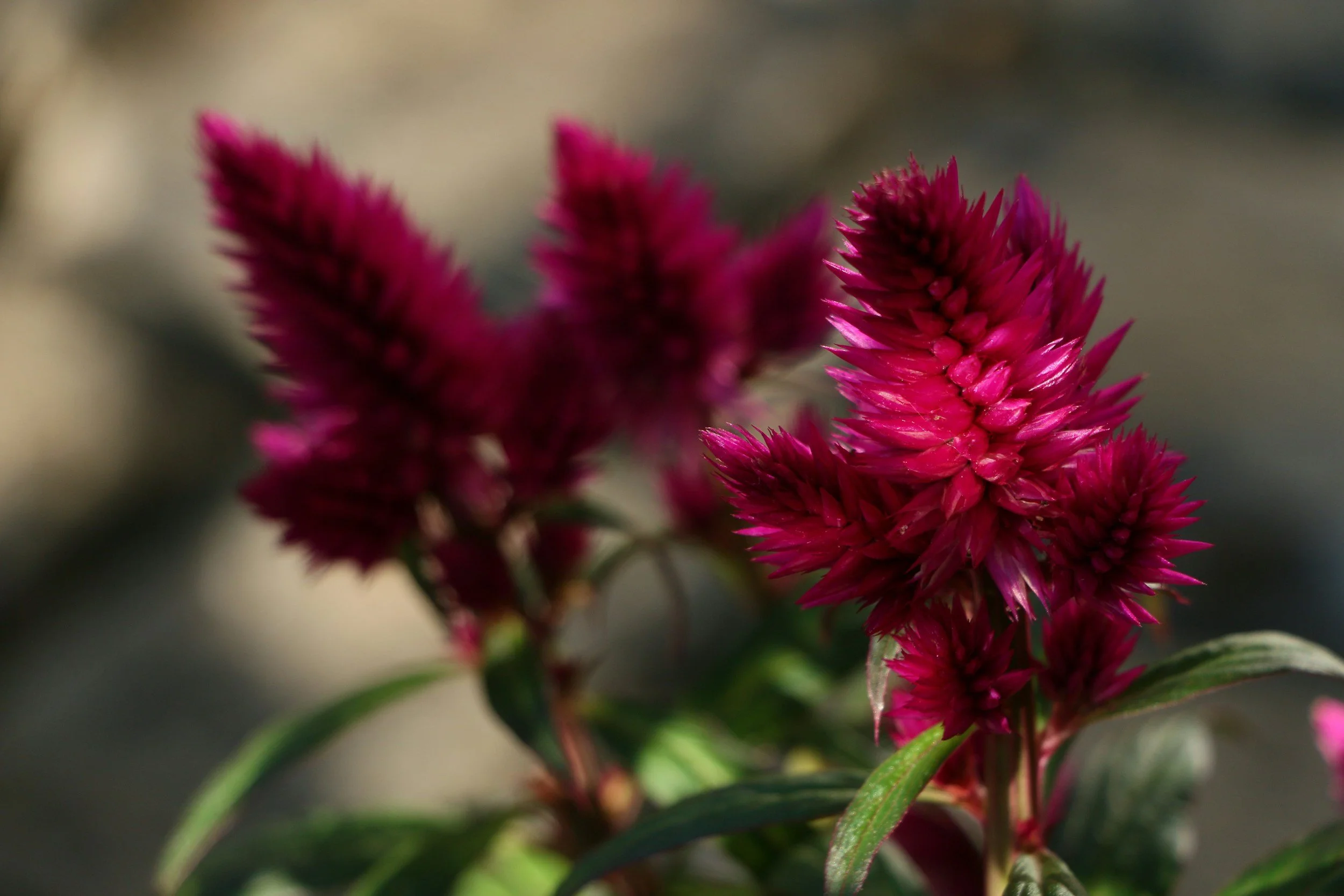
If a riot of dazzling color in an annual flower available in plume, wheat, or cockscomb shapes is just what will enhance your landscape, consider celosia.
The name means “burning” because of the flame-like flower heads, although the common name in their native range is “wool flowers.” Celosia are native to Africa and North and South America, but they are popular in summer gardens across the United States.
Celosia plants range from six inches to three feet tall. Their colors can be pastel or brilliantly vivid. There are three common types: plume, cockscomb, and wheat.
Plume celosia have multiple flower stalks that terminate in flame-like or feathery blooms of red, yellow, or orange. They make a beautiful border, whether planted in a variety of colors or in a single color. Plants range from 8 to 24 inches tall. They will bloom reliably from June until the first frost if regularly deadheaded.
Cockscomb celosia have dome-shaped blooms with curving lines, somewhat resembling a rooster’s comb. The traditional color is red, but yellow is increasingly available. Some newer cultivars are coral-colored, with tightly wound, curving lines that make the blooms look very much like a brain. At 12 to 36 inches tall, these beauties may need to be staked. Deadheading will extend their bloom time.
Wheat celosia are not as vividly colored as plume or cockscomb varieties, and their blooms are shaped like spikes of wheat. Colors are limited primarily to pink and white, although some newer cultivars are available in darker shades of purple. This type grows on a single, straight, very erect flower stem that reaches 12 to 36 inches tall. Remove the blooms as soon as they begin to turn brown, and the plant will continue to bloom throughout the season.
Celosia are low-maintenance, easy-to-grow plants that generally perform best in garden beds rather than containers. They prefer full sun, requiring at least eight hours of sunlight daily for the best performance, and well-drained soil. They need regular watering, but avoid overwatering. They will tolerate some dryness but cannot tolerate wet feet.
Celosia can be started from seed about ten weeks before planting outdoors. These warmth-loving plants should not be transplanted outside until nighttime temperatures are consistently in the upper 50s. Transplant them carefully, as they do not like having their roots disturbed. A little extra care during planting will help reduce transplant shock.
Be sure to space plants adequately. These larger plants need at least a foot of space to grow and promote good air circulation, which helps reduce the risk of fungal diseases. During the early stages of growth, pinch back some of the new growth to encourage stockier, sturdier plants.
Although celosia are annuals that die at the end of the growing season, their beauty can be preserved for further enjoyment. They make excellent, long-lasting, colorful dried flowers. Cut the blooms at their peak, remove the lower leaves, and hang them upside down in a dark, dry place for several weeks. When the flowers are no longer soft, they are ready to use in dried arrangements. Placing paper beneath the drying flowers will catch any seeds that drop. These seeds can be used to grow flowers for the following season.
Celosia are an excellent addition to any ornamental garden. Beyond their beauty, they are terrific pollinator plants that attract a wealth of bees and butterflies. If pollination has been a problem in your vegetable garden, consider planting a border of celosia.
Carol Shirk
Certified Master Gardener