Watermelon: Summer Treats
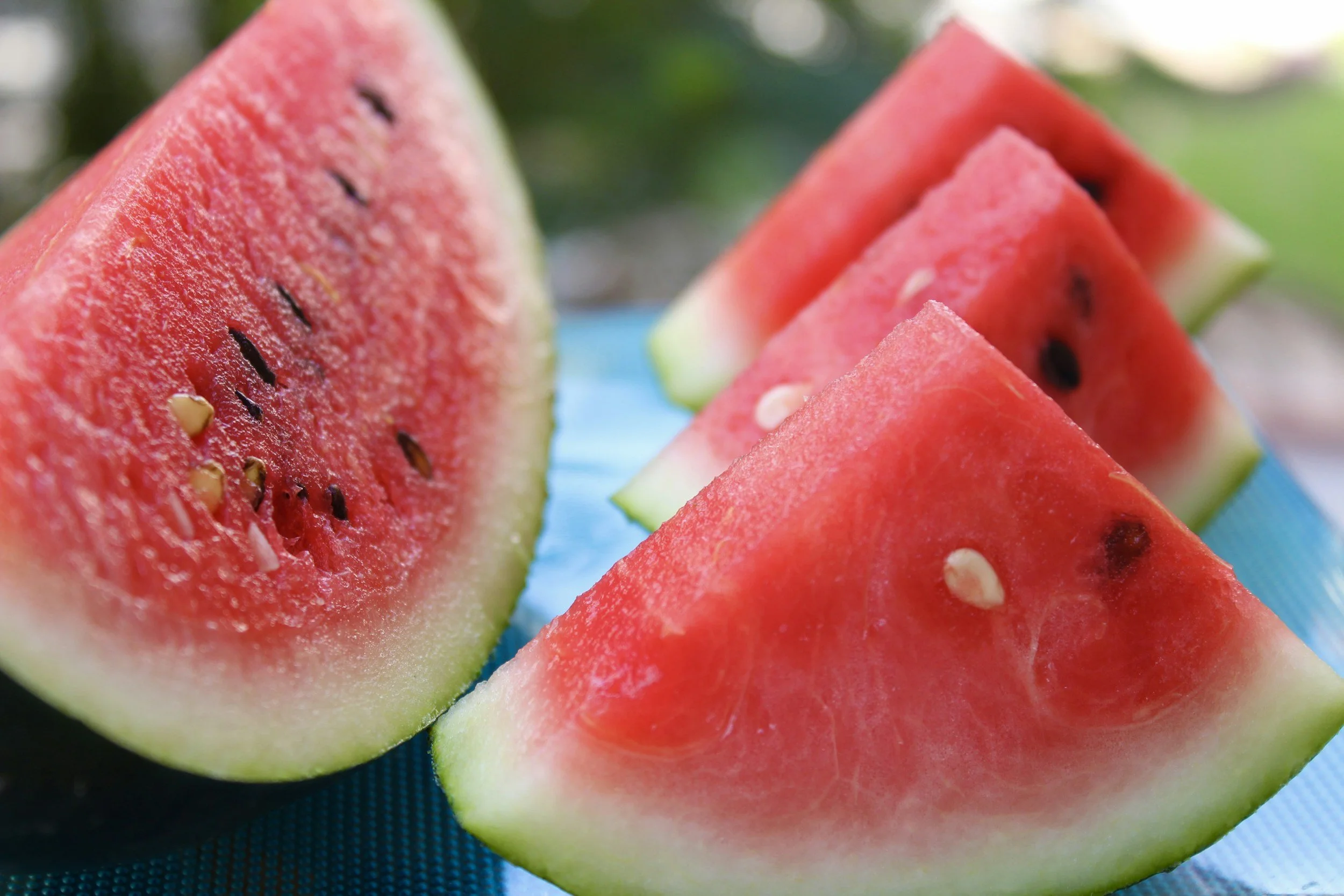
As a child growing up on an Indiana dairy farm, the Fourth of July was a special day. There was always a big watermelon chilling in the barn milk cooler. (We milked into cans, not a bulk tank. Yes, I am that old.) When chores were done, we would eat that treat with juice dripping off our chins and see who could spit the seeds the farthest. Occasionally, the seeds would find their mark on a sibling— “accidentally,” of course. Today, the most reliable way to get a watermelon with seeds is to grow one at home.
Watermelons (Citrullus lanatus) are in the Cucurbitaceae family and are related to cantaloupe, pumpkins, squash, gourds, and cucumbers. They are native to tropical Africa and are thought to have been brought to the United States by enslaved people. While the longer growing season and warmer temperatures of our neighbors to the south favor the growth of these summertime treats, they can be successfully grown in Wisconsin with some special care.
Watermelons need warm, sunny conditions to thrive, as well as ample space to spread out. Fertile, well-drained soil is important and can be improved by incorporating compost.
There are more than 100 different varieties of watermelon available to home gardeners, including ones with red, pink, orange, or yellow flesh. They are divided into three categories: picnic (15–45 pounds), icebox or cannonball (5–15 pounds), and mini (3–6 pounds). Wisconsin gardeners are wise to choose varieties that have a shorter growing season, preferably less than 90 days. That window can be extended somewhat by starting seeds indoors or using transplants.
Wait to plant until all danger of frost has passed and the soil has warmed to 60–70 degrees. Plant 2–3 seeds one inch deep in hills spaced six feet apart, with at least seven feet between rows. After the seedlings are established, thin to 1–2 plants per hill. If starting seeds indoors, use peat pots and transplant with care. Watermelons do not like to have their roots disturbed, so tear the bottom and sides off the peat pot carefully to minimize disruption to the plant.
Keep the bed weed-free by hand cultivation, taking care to stay away from those tender roots. Watermelons will not tolerate either excessively wet or dry conditions. Using mulch once the plants are established will help maintain consistent moisture levels and keep weeds at bay.
Watermelons are monoecious; they produce separate male and female flowers on the same plant. The female flowers develop into fruit after bees transfer pollen from the male flowers. Each female flower can receive pollination for only one day, so it is important to encourage as many bee visits as possible. Avoid using pesticides that might harm pollinators or interfere with their activity.
Although the “thump” method is often thought to be a good indicator of ripeness, it is better to harvest when the underside, or “belly,” of the melon turns from greenish white to buttery yellow or cream. In addition, the top surface will lose its shine and become dull. Not all melons ripen at the same time, so a daily trip to the patch is in order.
Carol Shirk
Certified Master Gardener