Eastern Tent Caterpillar

The Eastern Tent Caterpillar (Malacosoma americanum) is another unwelcome spring visitor, similar to the moles discussed in a previous article. This native pest causes concern for homeowners, particularly those with fruit trees such as apple, cherry, plum, flowering crabapple, and chokecherry. Less frequently, they also appear in hawthorn, ash, birch, maple, oak, poplar, and willow trees. Although unsightly, they seldom kill trees unless the tree is already weakened by disease or prior damage.
The adult moth is fluffy and tan to light brown, with two white, slanting stripes on its wings. It can be mistaken for the spongy moth; however, spongy moths do not spin silk or produce the distinctive tents associated with eastern tent caterpillars. Adults lay smooth, shiny egg masses—containing 150 to 400 eggs—that encircle small branches and hatch in the spring.
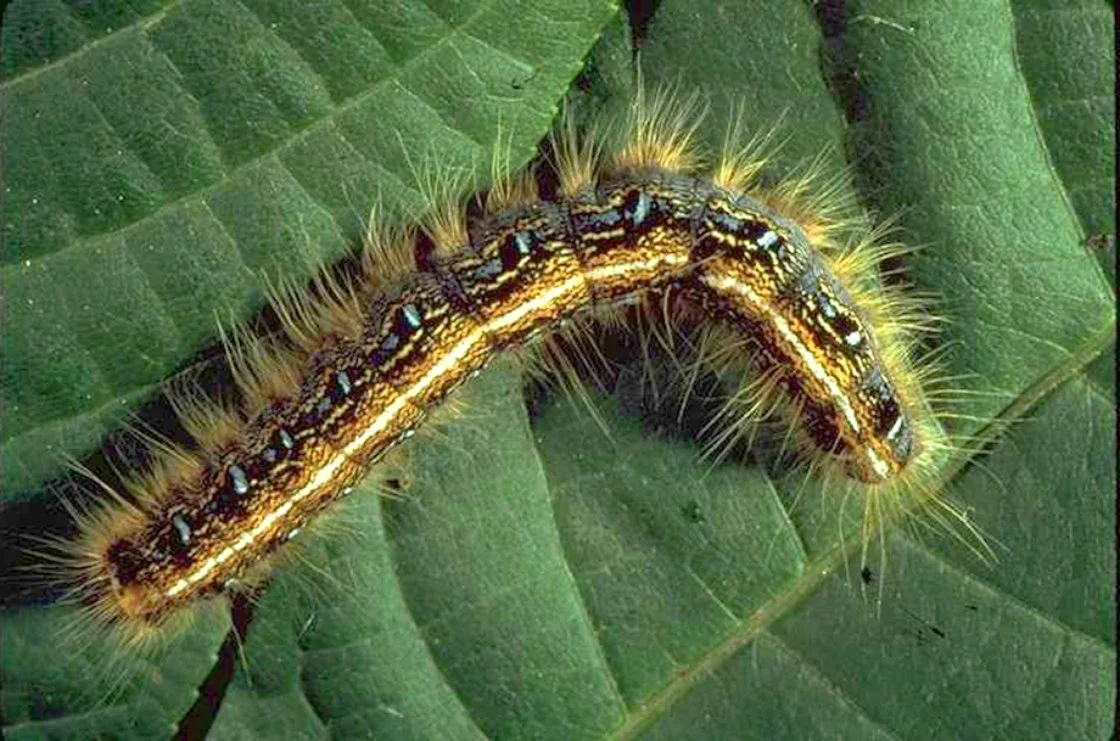
Once the caterpillars hatch, the trouble begins. They build webbed tents in the crotches and forks of tree branches. They are occasionally confused with fall webworms, but that species forms webs at the tips of branches rather than in the forks. Young caterpillars are dark with two thin yellow stripes along the back. As they mature, they develop a white stripe down the center of the back, flanked by two yellow stripes; the remainder of the body is mottled blue, yellow, and black. Mature caterpillars reach about two inches in length.
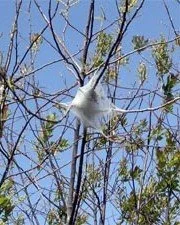
These web nests are created by colonies of caterpillars for protection against predators and adverse weather. The caterpillars leave the nest to feed on leaves early in the morning and again in the evening, returning during the heat of the day. The web expands as the caterpillars grow, sometimes reaching a foot in diameter.
After about six weeks, the caterpillars are fully grown and set out to find a place to pupate. They spin white or yellowish parchment-like cocoons on fences, tree trunks, or other available surfaces. Adults emerge about three weeks later, and the cycle begins anew. In Wisconsin, there is only one generation per year.
Although the Eastern Tent Caterpillar can be intimidating—especially when a web contains dozens of larvae—it is relatively benign. Due to many natural predators, including birds, populations typically remain low. Occasionally, however, they may proliferate and require removal. The best course of action is to remove nests by hand while wearing gloves (the spiny hairs can irritate skin). For best results, wait until the caterpillars are inside the nest before removing it. Then destroy the nest by crushing, burying, or burning it. Do not attempt to burn the nest while it is still in the tree, as this is dangerous and can cause more damage than the caterpillars themselves.
If a nest is located high in a mature tree and cannot be reached, doing nothing is a reasonable option. The damage is primarily aesthetic, and the tree will produce new leaves once the caterpillars are gone. Later in the year, scout for and remove egg masses to help prevent future outbreaks. Dormant oil sprays are effective against egg masses, but insecticides are not effective against mature caterpillars. Young caterpillars can be treated with Bacillus thuringiensis var. kurstaki (BTK), insecticidal soap, or horticultural oils. When treating, target only the nest rather than the entire tree.
Carol Shirk
Certified Master Gardener