Spectacular Salvia
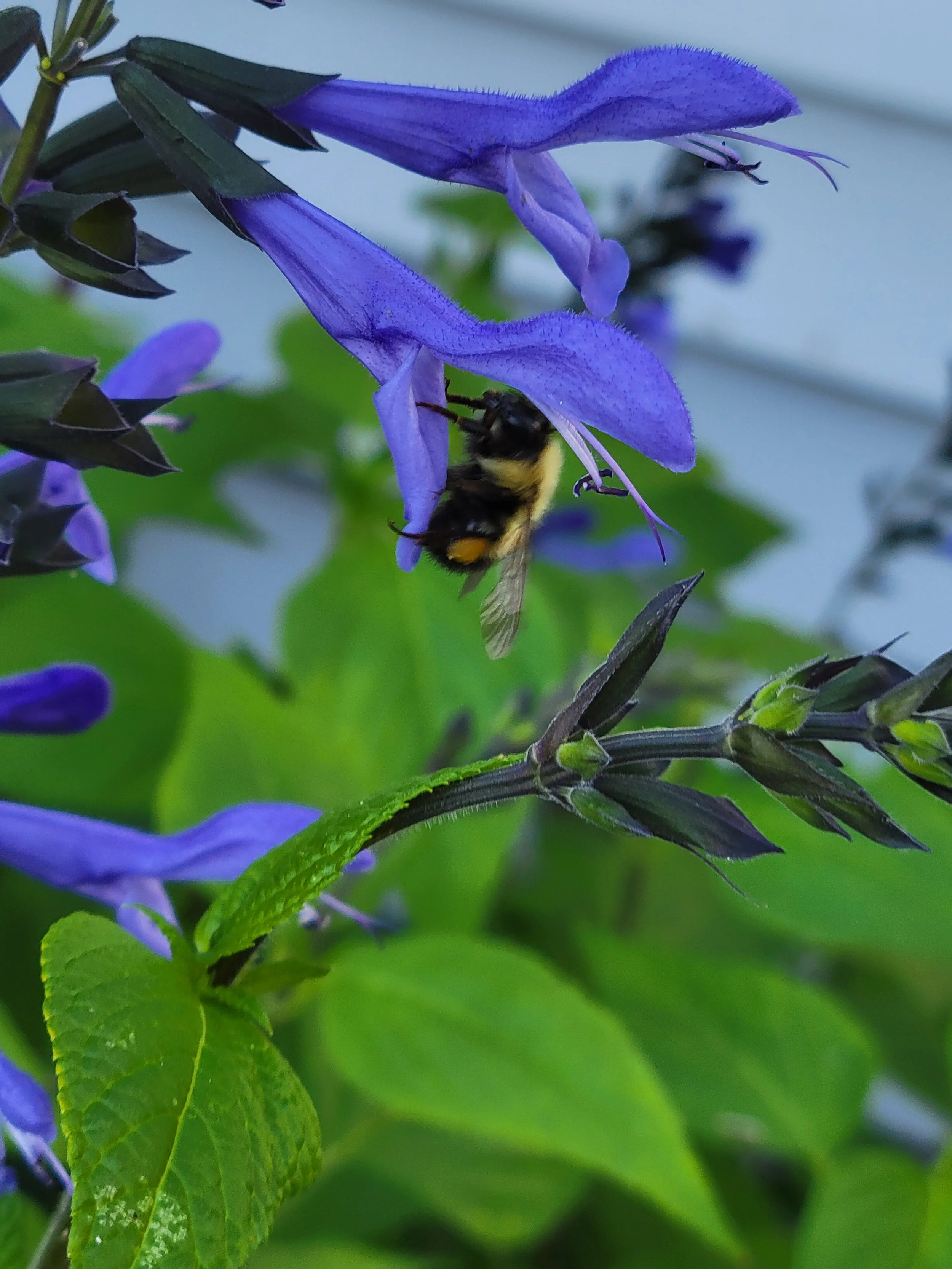
Salvia is a very large genus of both perennial and annual plants in the mint family. They hail from worldwide regions, including the United States. Most are ornamental, some are medicinal, and some are culinary plants. They are easy to grow, very low maintenance, and have endearing qualities.
The most common perennial salvia is Sage (Salvia officinalis), a woody shrub that will make a marvelous addition to Wisconsin gardens. Although there are many popular perennial salvias, the annual salvias tend to be the stars of the garden. There are four main species of ornamental annual salvias: Salvia coccinea, farinacea, splendens, and patens. In general, they can all be treated the same and require the same care.
Leaves on salvia can be glossy or fuzzy, but tend to be aromatic like their mint relatives. This makes them undesirable to deer and rabbits. They all have square stems typical of any plant in the mint family. Their blooms of white, pink, peach, red, burgundy, blue, purple and bicolor attract pollinators in hordes. The tubular flowers with a split lower lip are perfect for hummingbirds and will attract a wealth of them as well. As the saying goes, “It you plant it, they will come.” The bottom flowers will open first and progress to the top. Removing spent blossoms will encourage more blooms as the season progresses.
Depending on the species planted, it is possible to have salvia blooming from mid-spring well into early fall. Once the threat of frost has passed, plant them in full sun for best results. They are drought tolerant and will do well in drier locations, but water them occasionally. Average soil is best. If the soil is nutrient dense, the plants will become leggy and flop. Heavy clay soil will cause root problems and should be loosened with some organic matter first. While rabbits will avoid mature plants, they will nibble on seedlings, so protect them for the first month.
Salvia makes a striking display in a mass, particularly with mixed colors. Pair them with contrasting yellow, orange, and white mounded flowers. They look particularly stunning along a fence or stone wall. While they can be planted in containers, do not skimp on the container size. Keep in mind that these are not small plants. They will be 12-18 inches tall and 12 inches wide. Some cultivars will grow up to 5 feet tall, so choose carefully.
Annual salvias are evaluated as part of the University of Minnesota flower trials and research located at their research station in Morris, Minnesota. This is part of their Horticulture Display Garden and serves as an All-America Selections (AAS) Display Garden and Trail Grounds to provide the public an opportunity to view the newest superior performers.
Salvia can be started by seed indoors about nine weeks before planting outside using general seed starting practices. In addition, they can be started using the winter sowing method, using a cut off plastic jug and setting outside in the weather around March or April. Or, simply purchase started plants from a reliable nursery when the season begins. Whatever method is chosen, make some room for spectacular salvia in the landscape this season. You, the bees, the butterflies and the hummingbirds will be happy you did.
Carol Shirk
Certified Master Gardener