Spider Plant: a Good Beginning
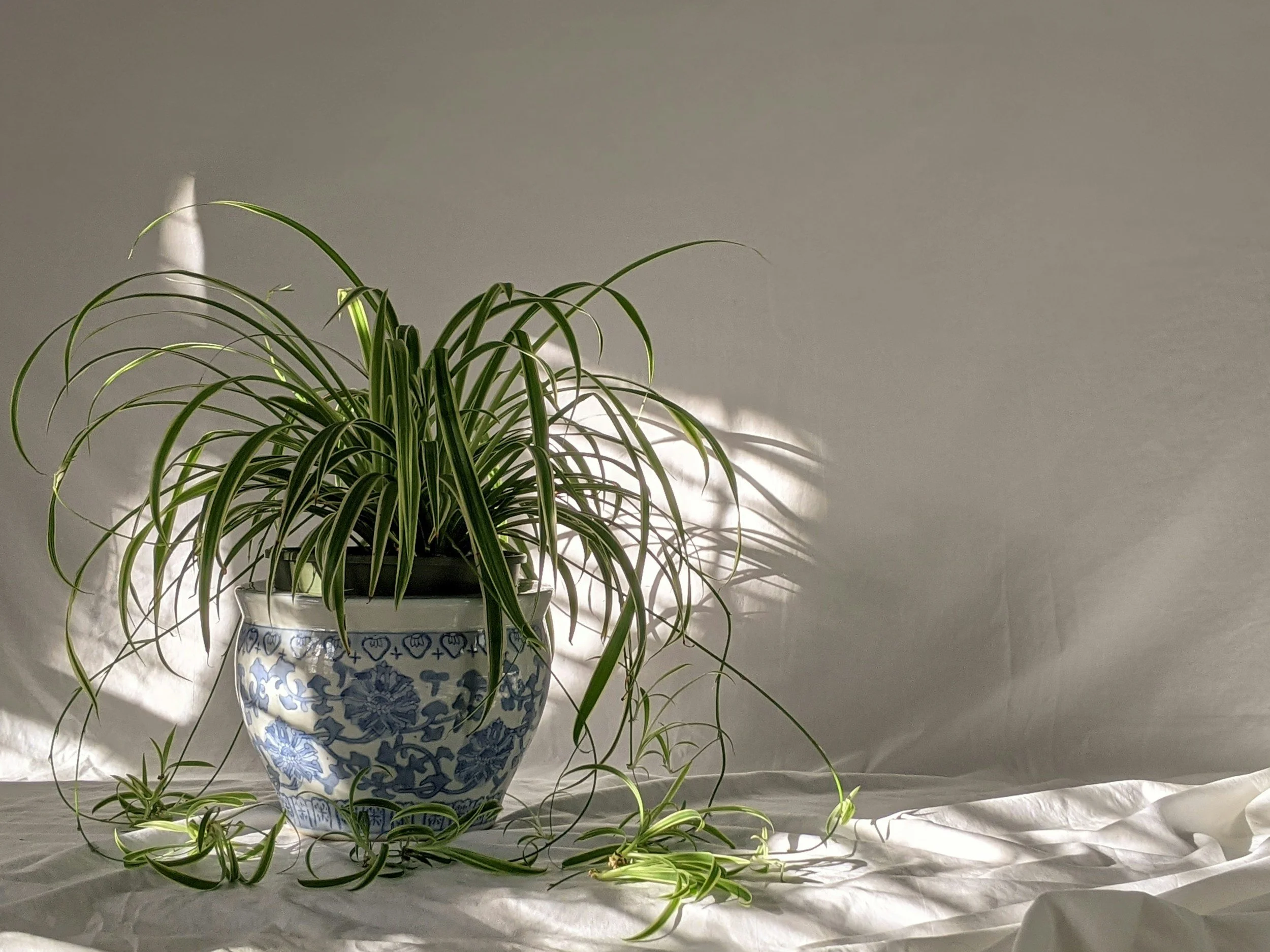
If house plants have not been your forte, but you want to give them a try, seriously consider the spider plant, (Chlorophytum comosum). These plants are great for beginners as they are forgiving, easy to grow, easy to propagate, and lovely to look at.
Spider plants are an herbaceous perennial houseplant in the asparagus family that hales from Western and Southern Africa. It appears to have been introduced to Europe by the end of the 18th century by a student of Linnaeus who traveled to South Africa collecting specimens of various plants for his botanical work. During the Victorian period, this plant gained great popularity because of its hanging decorative beauty, and it graced many homes.
Spider plants can be solid green or variegated with lengthwise stipes of either white or yellow. The long leaves have a ridge almost as if they are folded down the middle. They will grow 12-15 inches tall with the leaves arching from the center. The root system is thick and fleshy, making it able to withstand periods of inconsistent watering, another plus for beginners. It prefers medium light, but will grow in nearly any conditions save bright direct light.
What gives the spider plant its unique name is the plantlet, or “spiders,” that are produced on long wiry stems. First, however, come the small white, flowers with no significant fragrance. From each of these flowers, a spider will grow, making the mother plant heavy with babies. The plant will produce plantlets best when slightly pot bound, so don’t be too quick to repot mature plants. However, they do grow quickly and will need repotting every other year to stay healthy.
Another added bonus to spider plants is its air cleaning quality. Research has shown that it is very effective at absorbing chemicals including formaldehyde, xylene, benzene, and carbon monoxide from indoor air.
Tip burning is one common problem with this plant. To avoid the problem, do not use tap water. The fluorine and chlorine in the water is the culprit. Instead, use either rain or distilled water. In addition, allowing them to dry too much can also be the cause. Allow the plant to dry slightly and then give it a good drink. If tip burning has occurred, the tips can simply be trimmed with a pair of scissors to clean them up a bit. If the problem reoccurs, it might be time to start a new plant from one of the babies and compost the mother plant.
To propagate spider plants, simply put a plantlet, still attached to the mother, in a pot filled with soilless potting medium and anchor it with a paper clip or wire. Allow it to root (usually about 6 weeks) before removing it from the mother plant. Another method is to take a larger plantlet that has already developed some roots, dip it in rooting hormone, and pot it in soilless potting medium. Keep it moist for several weeks until the roots are well established.
Spider plants (incidentally, also called airplane plants, for obvious reasons) make a great addition for any houseplant aficionado and are a wonderful place for a beginner to start. Best used in a hanging basket type arrangement, they will brighten any home, no matter how large or small.
Carol Shirk
Certified Master Gardener