Growing Hazelnuts: To Be or Not To Be
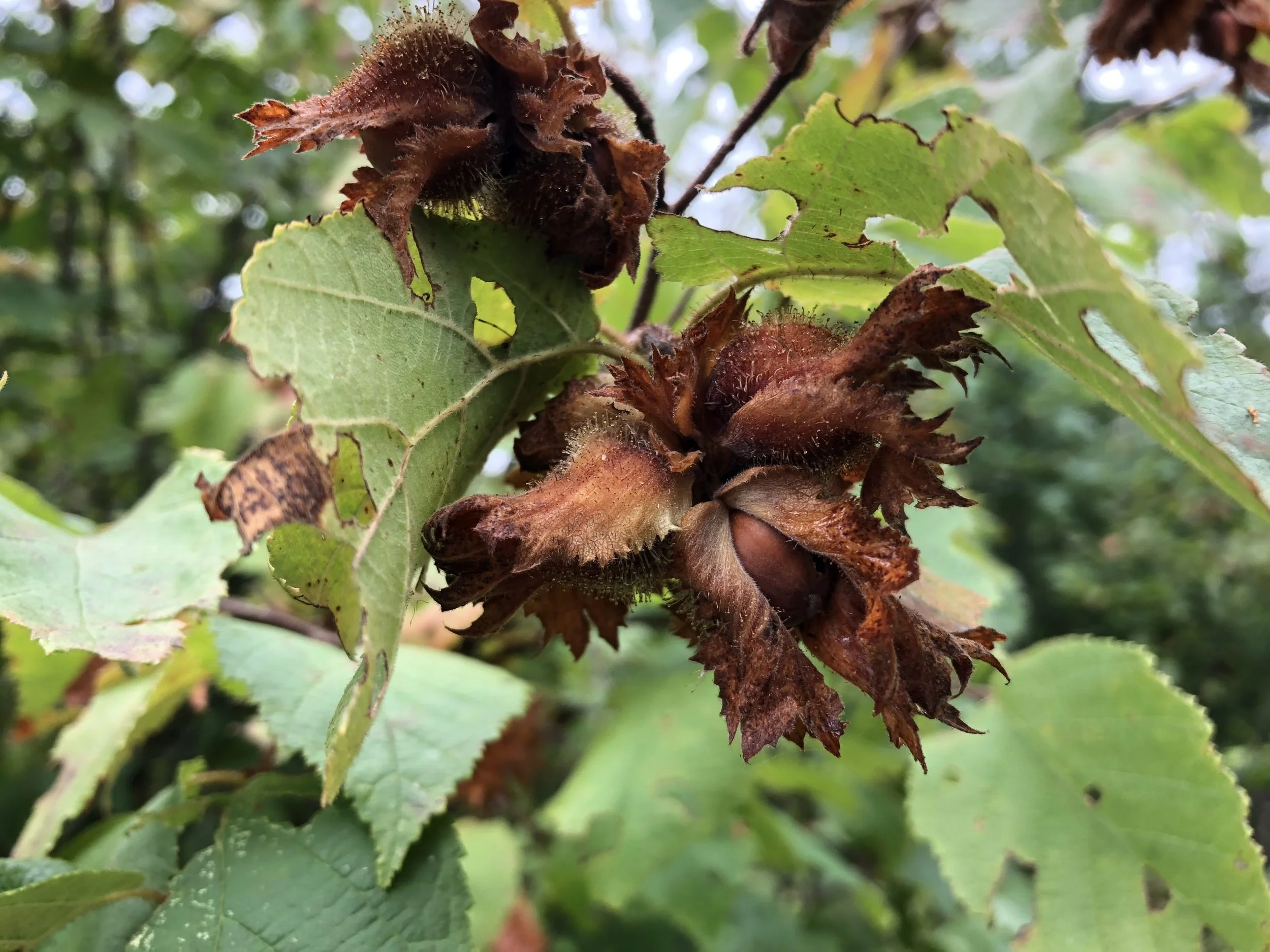
It is difficult to grow many nuts in the state of Wisconsin in an urban landscape. Most nut trees are too large to squeeze into urban lots. To further complicate the problem, many nut trees are not hardy to the Wisconsin cold. Delicacies such as pecans, almonds, cashews, and pistachios just cannot cut it. However, research being done on hazelnuts is making it more feasible and they might be one of the few to grace a larger urban landscape.
Gardeners like to experiment. Most are not content to plant the same thing over and over and like to step out into territory that sometimes pushes the limits. Enter hazelnuts, also known as filberts. In Wisconsin, there are two species of hazelnuts: American (Corylus Americana) and beaked (Corylus cornuta). There is also a European hazelnut (Corylus avellana), but it cannot withstand the cold Wisconsin temperatures. As the popularity of hazelnuts grows, not only with gardeners, but also with commercial growers, more hybrids are being developed.
Fortunately for gardeners, both the Wisconsin species are shrubs and not trees. This lends them to being grown in smaller spaces that larger nut trees cannot fit. In their native environment, hazelnuts are found in well-drained soils, particularly sandy areas. The hybrids are more tolerant of a variety of soils, but flooded areas will not be an option. Full sun is a must for optimum nut production. It takes approximately 4-5 years for maturity and full nut production. Like most nut trees, the harvest is done in the fall. Hazelnut production can be increased by cutting back the plant to ground periodically (a practice known as coppicing). The plant will come back from the stump sprouts. Harvesting can be done when then nut husk is still green since when they turn brown, competition from wildlife will increase exponentially.
Hazelnuts are monoecious, meaning they have both male and female flowers on the same plant, so a second plant is not necessary for pollination. They are a fast-growing plant that can add 1-2 feet annually, topping out at 6-12 feet. They can be pruned any time of the year and are an easily cared for shrub. Rodents do like to gnaw at the trunks in the winter, so keep the area around them mowed plus control weeds to keep those critters at bay. When planting these shrubs, consider making them a nice transition between a yard and a woodland. They can also be an ideal windbreak or privacy barrier.
Hazelnuts are the second largest nut crop in the world with almonds coming in first. While Turkey is the greatest producer of hazelnuts, the United States is gaining ground. Hazelnuts are used in confectionery (think Nutella as well as other things), coffee, oils, and eaten out of hand. The biggest challenge facing Midwest producers is harvesting and processing. However, a homeowner will not have the same issues. One shrub will produce sufficient nuts to supply a family a nice quantity of nuts for baking, eating, and general enjoyment of this rich, concentrated, sweet, buttery nut. If human nut consumption is not the goal, wildlife will appreciate the nuts and the bush is an attractive addition to the landscape.
For more information and assistance, go to http://www.midwesthazelnuts.org/ which is supported by the University of Wisconsin-Extension, and includes current research being conducted as well as information on getting started.
Carol Shirk
Certified Master Gardener