Nocturnal Pollinators
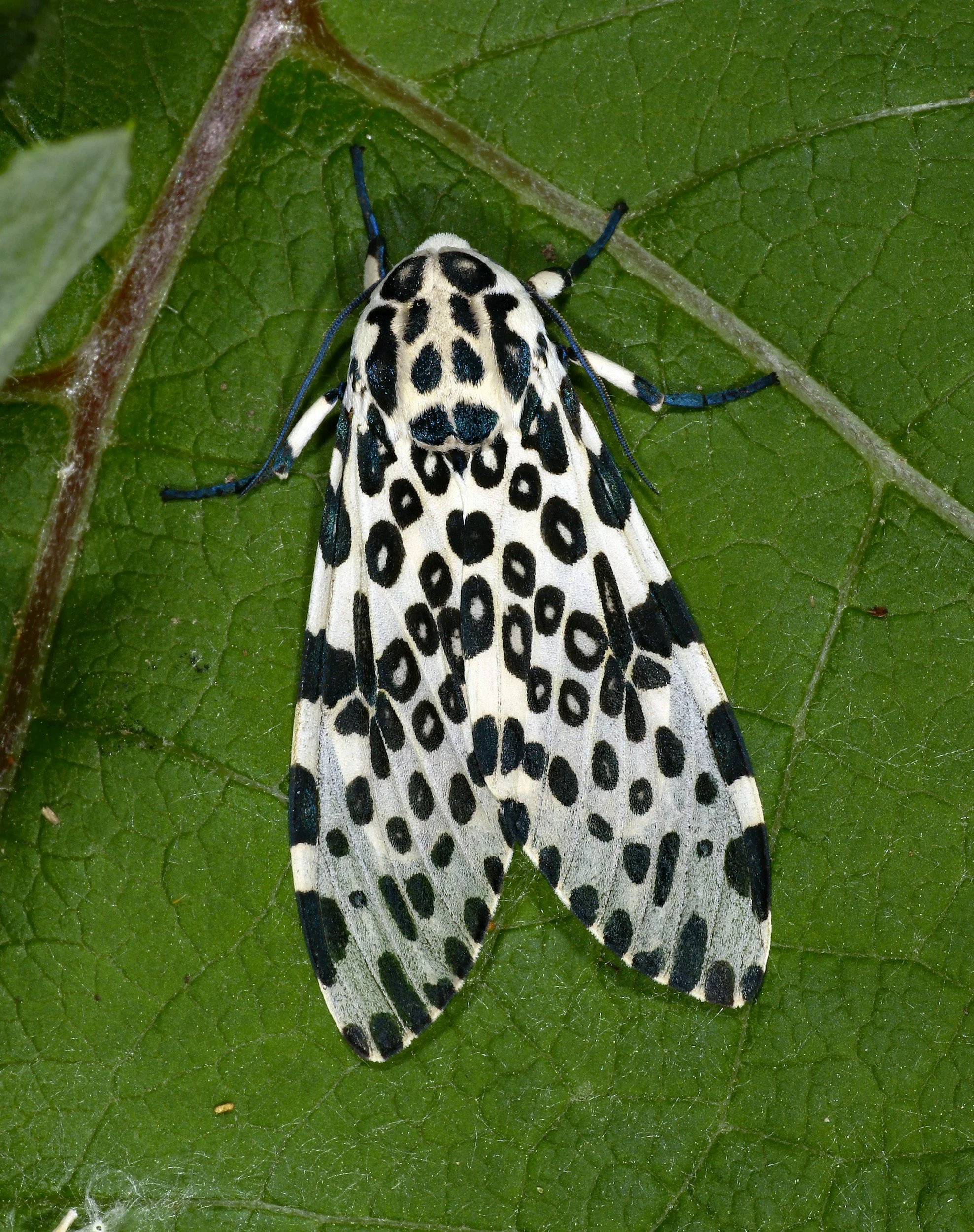
Giant Leopard Moth (Hypercompe Scribonia)
The importance of preserving pollinators has become a well-established fact in today’s world. With one out of every three bites of food consumed dependent on pollinators, their impact cannot be overstated. Honeybees aside, worldwide insect pollinators face daunting prospects. With habitat loss and increased use of pesticides, pollinator decline has become a major concern. However, increased attention on the situation has begun to turn the tide.
One area that has not received adequate attention is nocturnal pollinators. While bees and butterflies are on center stage, the lesser known, but equally important, nocturnal moths could use a boost. There are ten moth species for every butterfly species. Granted, not all moths are pollinators, but those that are provide an important function in the ecological balance.
Nocturnal pollinators were long thought to have little food crop value. But a three-year study, on apple trees at the University of Arkansas Division of Agriculture Experiment Station showed that nocturnal pollinators did just as much pollinating as non-native honeybees during daylight hours.
The White Lined Sphinx Moth (Hyles lineata) is an important Wisconsin nocturnal pollinator. They are attracted to scented flowers during the day, but flock to white and pale flowers at night. With a wing span of up to three inches, this big fellow is rapid, strong flyer that can hover almost like a hummingbird.
The Owlet Moths are a very large family (Noctuidae) whose caterpillars can be agricultural pests. However, the adults are great pollinators, visiting goldenrods, asters, rudbeckia, gaillardia, witch-hazel, and columbine. They are small and somewhat drab with lines and spots that resemble tree bark. Some fool predators with coloring that resembles bird droppings. They are attracted to lights, much to their demise.
The Giant Leopard Moth (Hypercompe Scribonia) is a beautiful creature with white with black spots. Its defense is chemical rather than camouflage. They visit roadside and landscape gardens and are incidental pollinators, spreading pollen as they go from plant to plant.
Pug Moths are a large family (Eupithecia), that are important pollinators to fruit growers. They work through the night are contribute as much as the honey bees do during the day.
To help preserve nocturnal pollinators, be conservative of outdoor lighting that might attract moths and either make them more vulnerable to predators like bats, or cause their inadvertent death as they spiral around the light. Turn off outdoor lighting or use motion activated lights that come on only when needed. Better yet, use natural light like the moon and the stars to navigate, but by all means, be safe.
Additionally, you could plant a moon garden specifically designed for nocturnal pollinators. This design incorporates reflective surfaces (hence less supplemental light), light colored flowers, and fragrant plants. It can be as simple as a few potted plants on a deck or patio or as elaborate as a creative mind can imagine. Aim for white and pastel flowers in shades of yellow and blue. Some good options include bleeding heart, creeping phlox, yarrow, evening primrose, Shasta daisy, and sweet alyssum. Don’t neglect to add some plants with grey/green foliage for the moonlight to reflect off the leaves. Lamb’s ear, blue fescue, and lavender are all good choices.
Each homeowner can contribute to the work of helping nocturnal pollinators by making an appropriate space for them, minimizing nighttime lights, and being cognizant of their needs.
Carol Shirk
Certified Master Gardener